Sous Vide Cooking

Those of you that have been following me on Facebook know that I use the sous vide technique a lot in my cooking, mainly involving meats.

While it’s getting more popular, this technique is still not common knowledge, so it’s worth talking a little about it and how it can help your cooking on a budget.

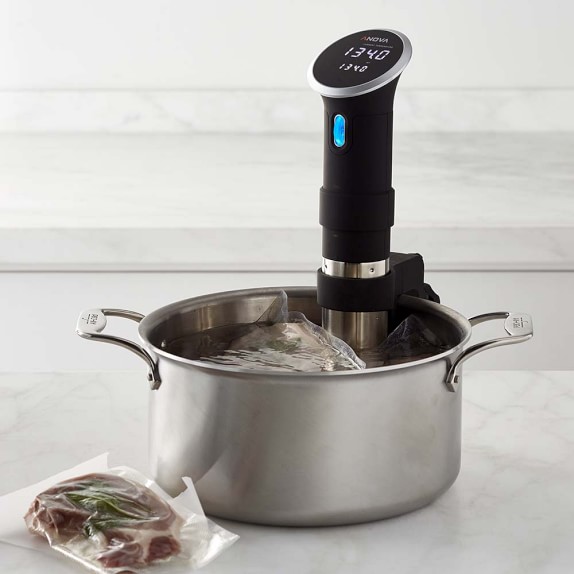
Sous vide is French for ‘under vacuum’.  It is the process of vacuum-sealing food in a bag, then cooking it to a very precise temperature in a water bath. The results it produces is virtually impossible to achieve using any other cooking method.

No, this is not ‘boiling food in a bag’.

Because it enhances flavors of the food little or no additional salt or fat is needed. I usually put just a little salt and pepper on the meat. You get the full flavor of the food and not the additives. Because it is cooked in a vacuum sealed bag no vitamins or minerals are boiled or steamed away. In fact the natural meat juices are collected in the bag and are used by me as additional flavor in other dishes like soups and gravies.

This method of course requires the use of machine called an immersion circulator (the price range can be from as little as $69 on up. I opted for one at a little under $90) to keep the water at the proper temperature so the food cooks slowly at a low temperature. It has been used at least once a week for about a year.

The idea is to cook food gently, well below the boiling point. The water is heated to the temperature that is recommended for the food’s ideal temperature, never any hotter and never to the boiling point.

Even though sous vide is French for vacuum sealing, you do not need a pricey vacuum sealer. I usually use a regular Ziplock-style bag and a simple water displacement method to remove all the air from the bags.

The main reason that I started to use the sous vide cooker was to give the tougher, cheaper cuts of meat the slow and low cooking treatment. It has not been intended to be a fast method of cooking; however, it is a safe way to know you will get the same results every time you use it and you don’t need to be in attendance.

There are of course additional touches to be done if you want to put a finished look on things like a juicy steak. That is just using a bit of mayonnaise brushed on the outside and quickly seared on the outside grill about two minutes each side for a medium rare inch and half to two-inch piece of meat.
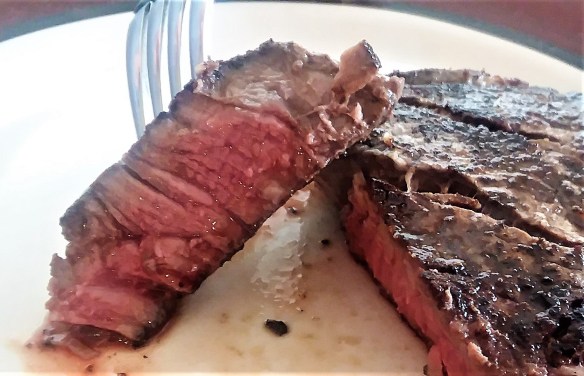
Even though the sous vide can be used for vegetables to eggs, I mainly use if for beef, pork, shrimp and of course baby back ribs.
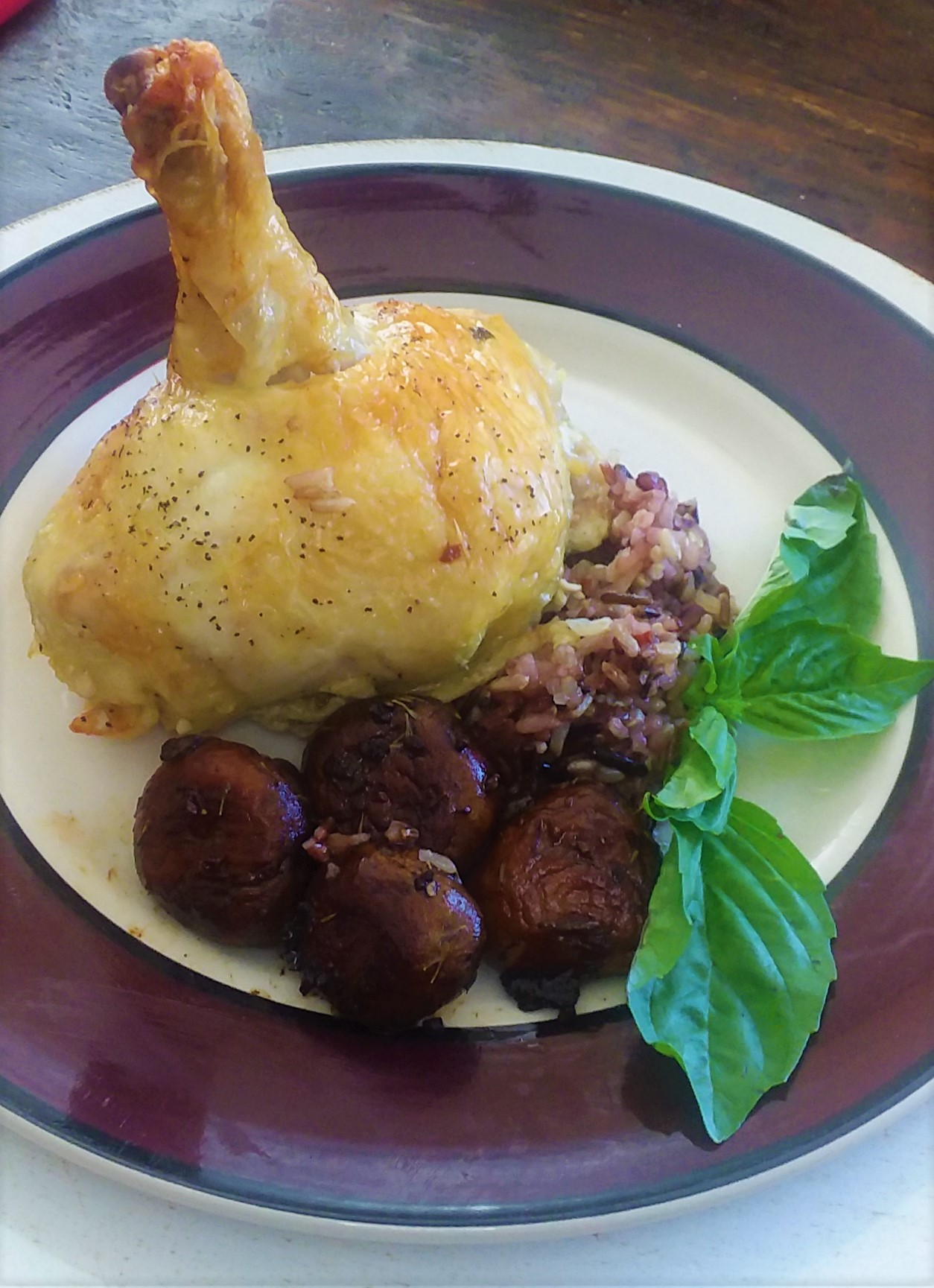

Chicken menage a trois

One of the first things eating well on a fixed income is planning. By planning I mean to sit down and think about what you want to eat for the coming week. If you are working and don’t have much time during the week to cook, plan to do make ahead meals that can just be warmed up.

Check out what items are on sale. Most stores now have an on line site that tells you what is on sale. The mail has flyers that are sent to you. Check them out.

Work out a menu and make a list of what you need. When shopping stick as close to the list as you can.

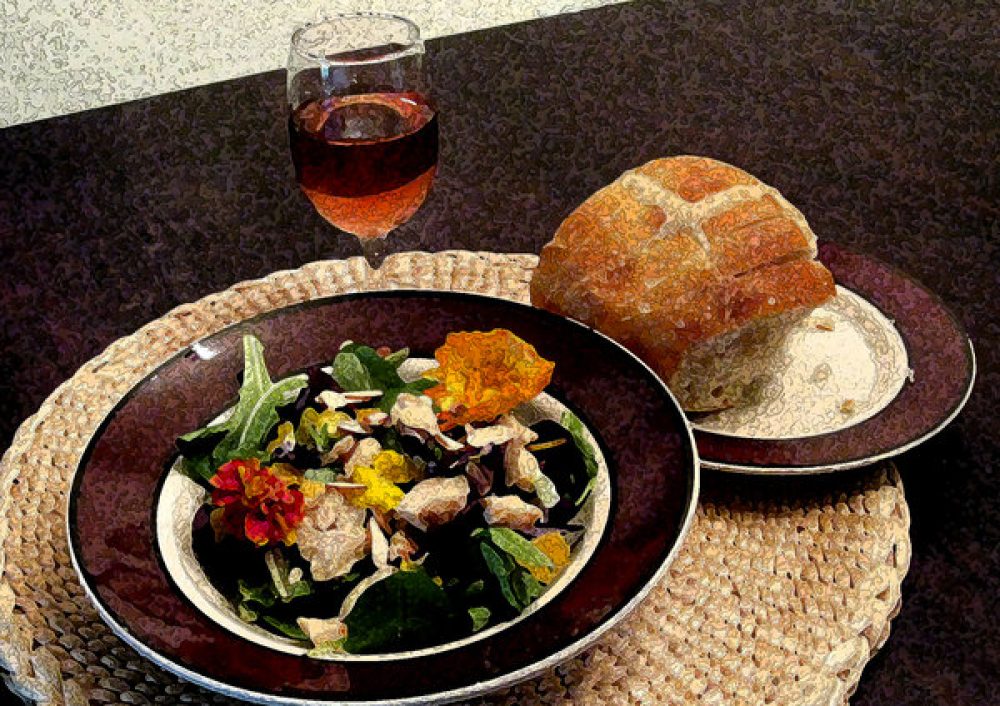
An example of this pictured is a one bone chicken. This meal is planned for two people.

It is one whole de-boned chicken, baby Bella mushrooms, wild and Jasmati rice.

Since I already had the rice, butter and spices I didn’t need to buy more so not enough to factor in at this time.

The chicken cost $5.49. The mushrooms were $3.00.

A total of under $9.00.

$9.00 seems a bit much for a meal at home. Consider that there will be at least six servings from the one chicken.

One bone chicken with mushrooms and rice the first night.

You need to de-bone the chicken except for the drumstick. All others bones including the wings go in a stew pot for using with some spices and onion boiled to make a chicken broth. You will now have the basics for a rich broth for chicken and dumplings. By picking the bones of all its meat you have meat for chicken Quesadillas or tacos.

For the chicken and dumplings, you add two carrots, two ribs of celery, one small onion. One cup of flour and two eggs. There will be enough chicken and dumplings for at least two serving of lunch.

Chicken Quesadilla’s the third dinner.

You get the idea. Basically hopefully you can see that the initial cost of $9.00 has now broken down to about $1.50 per person out of one chicken and a small tub of mushrooms.

I didn’t include the cost of the carrots, onions or celery and homemade salsa because they are used for many meals and from staples in the kitchen like the rice. For all of them broken down would only be pennies for these dishes.

Getting Started

I need to mention a few things before I get down to the food shopping and cooking.

There are many different levels of fixed incomes. Food budgets are one of those things that are dependent on other living expenses. I can’t even guess what an individual’s circumstances might be. What I’ll being doing in this blog is tell you what I do to make ends meet and maybe it will be something useful to you.

Other than that, the recipes and handy hints I share will hopefully be affordable for you in your situation. Even if they’re a bit of a stretch financially, they’ll be delicious and easy to do.

Also, I have some appliances, cookware and utensils that I have had for a while and to buy them would be expensive for the first outlay. I will highlight those. They are not necessary but nice to haves and make cooking easier. They can range between $10 to $100. I save up a little at a time until I have enough to buy them. However, I do research for the best price and I check out what other users have to say about them. America’s Test kitchen is a great site when trying to decide if you want to spend money on a new faddish appliance that once you have it you may not ever use it again. As a general rule, stay away from kitschy or single-function gadgets. They are money wasters.

If I use something specifically designed for a certain task I will tell you the price I paid for it, how often I use it and the results.

Must haves: A working stove, a couple of sizes of iron skillets, a 2-quart sauce pan, a large stew pot, and several sizes of mixing bowls. A set of wooden spoons, a couple of spatulas, a mandolin for slicing, and sharp knives.  And of course, measuring cups and spoons.

Nice to haves: A rice cooker, an oven safe enamel coated iron pan with lid for the oven, a hand held blender, a crock pot, deep fryer, a sous vide, an outside grill, and an offset spatula often called a fish spatula. The two I find that get used the most are a rice cooker and the sous vide.

It is my hope that you will enjoy my posts and my food pictures.

Until next time have a wonderful day.

The Fearless Cook

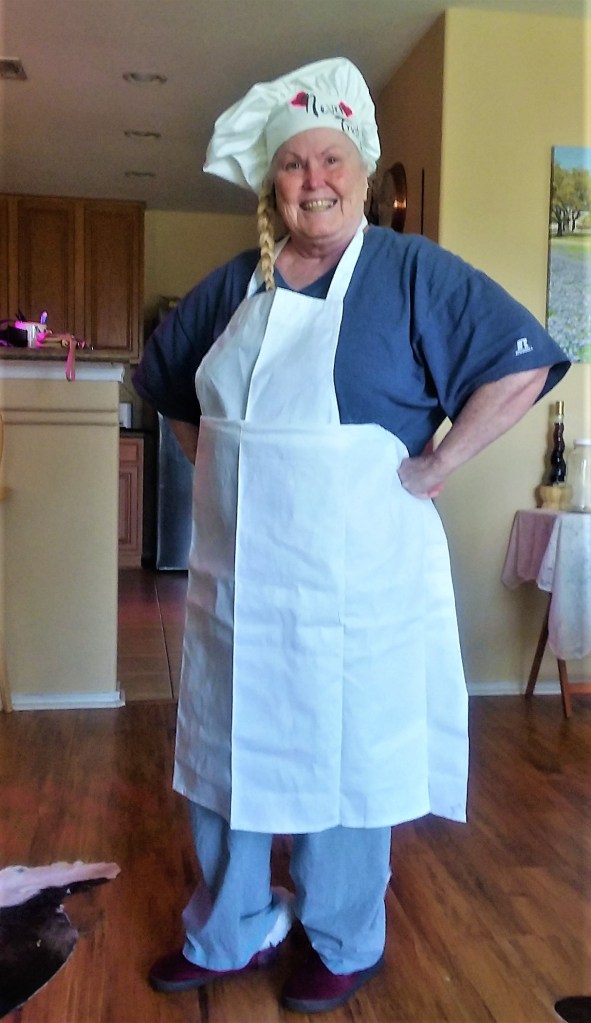
The Fearless Cook in her element!

I like to think of myself as a fearless cook.

I’ve started this blog as a sort of a diary of the different recipes that have become my favorites. That list of favorites has grown to be a lot bigger than I had originally expected. Still, the ones that will be shown here are examples of my cooking philosophy.

‘A feast starts with the eyes’ is something I always keep in mind. Presentation always plays into the idea that something is going to taste good. My personal cooking philosophy also must ask two questions about any meal:

1. Is it economical to prepare?

Being on a fixed income I am always aware of the costs associated with what I cook. This goes beyond checking for what items on sale: there are some cheap foods which simply can’t be turned into anything worth eating. I’m more apt to ask ‘what’s the cost per serving’ or ‘how many meals can be made from this’.

2. Is it easy to make?

I’ll be including a section where I explain shortcuts to use to save cost and ensure that things come out the way they should. I have made breads and cakes from ‘scratch’, but the use of prepared mixes and dough are just a couple of items that are cost effective and eliminate waste in the long run.

A good number of the recipes are from derivations for Chef John from Food Wishes.com, the Minimalist and a few other videos. They are tutorials of cooking technique as well as practical recipes. They have helped me learn several tricks that mother never taught me.

Other inspirations come from trying out different foods at restaurants. I sort of reverse engineer and duplicate the tastes at home. A good many of times the cooks and chef will at least tell you what is in a dish if not the actual amounts and technique secrets. Almost all chefs are thrilled and ready to talk about what they cook and I find extra ordinary.  A good measure of the skill that I am acquiring is that I can tell the ingredients by taste. In most cases I can improve on the dish at home.

The internet is a marvelous way to learn technique. A recipe most times does not share the nuances of the technique or the way a new recipe is supposed to look when it is finished.

I hope that anyone reading this finds it fun to explore the different cuisines. With the grocery stores and the on-line stores like Amazon, it makes it much easier today than it did when our mothers did the cooking to find the ingredients that are not available locally.

So, if you want something more exotic than Taco Bell, use your computer and You Tube, to access the exciting world of cooking.