STOP! Don’t toss those greens!
I don’t know where the idea that radish, turnip greens, carrot tops, kale stems, broccoli stalks, and other common veggie scraps should be discarded came from.
For decades, we’ve been throwing away some of the most nutritious herb portions of the fresh vegetables. Mostly I think because in the grocery store’s produce department they have already been removed. One reason may be because they take up less space after the leaves have been chopped off.
The other reason is the convenience of buying them in a can. Canned veggies are easier to store, last longer and easy to prepare. Today’s busy life-style has even grown the already cleaned, cut up and measured portions of fresh vegetables industry. So for convenience sake, cooks everywhere have lost knowledge while loading their family’s dinners with loads of salt and sugars for preservatives.
Fortunately, that knowledge can be regained with a push of the button on Google search. Learn what the term organic really means, instead of just paying higher prices for items that are labeled as such.
Visit a local farmers market if you can. Where I live in Texas, I am lucky. Any Saturday there are at least three within driving distance. There is also Asian food markets. They are all worth a visit.
Right now, I am going to concentrate on the ‘Lowly Radish’.
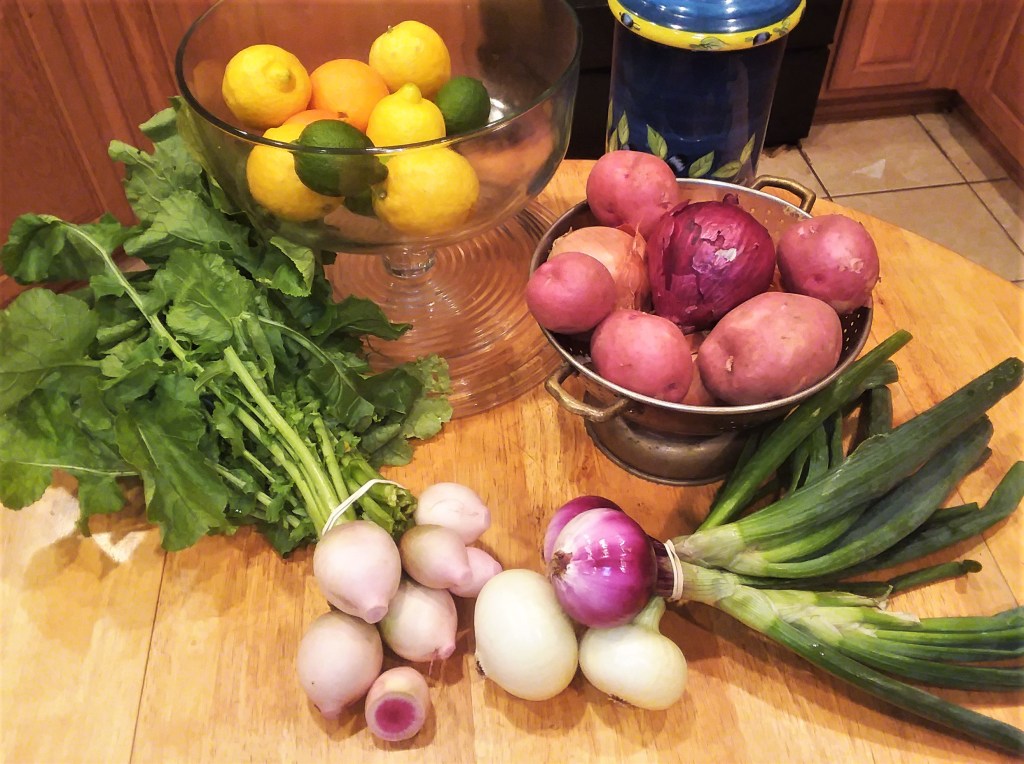
Up until recently, I only knew of one type of radish. The little round red ones you see at the supermarket. My first experience with a different radish came from a visit to an Asian market where I became familiar with the large, long white radishes called daikon.
I first used it for carving and decorations for salads. Then I discovered the watermelon radish, a beautiful pink inside. Again, I used it for decoration. Since then, I have found out it can be used in soups and stir fries. There are several others I plan on using later on.
On a recent trip to one of those farmers markets I mentioned I spoke with an older farmers wife selling her home-grown vegetables. She had watermelon radishes. Rare to find because the stores like Whole Foods sell out quick when they do have them.
Anyway, we began talking and that is when I found out that like beet tops, radish tops were also edible. So I purchased them. When I got home from the farmers market the first thing I did was cut the greens from the roots.
Otherwise, the leaves will pull moisture from the radishes, and they won’t stay fresh for long. If you’re not using the greens right away, wash them wrap them up with a damp paper towel and store them in the crisper drawer of your fridge.
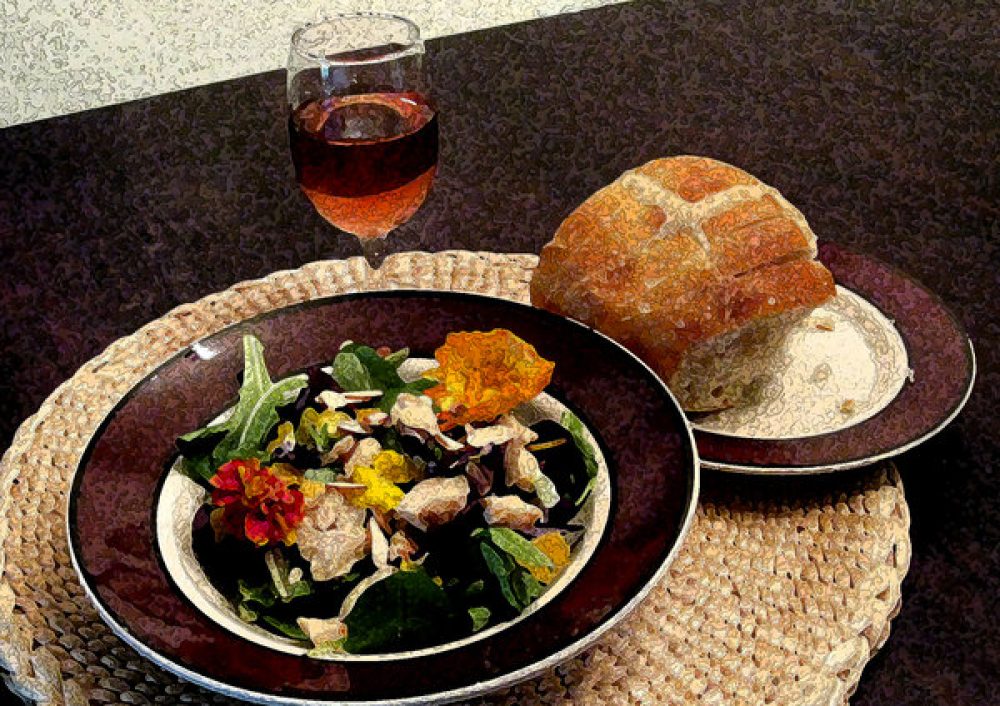
The first dish I prepared was a wilted salad. The lovely peppery flavor, hot bacon grease, vinegar dressing was topped with chopped boiled egg was better that the wilted spinach salads I have had. I just made a pesto with the greens and it is the best I have ever tasted. These are just two ways I have used them so far.
The following information was gathered from my visits to the internet I wanted to include them here because they are worth knowing.
***
The health benefits of radish leaves are varied ranging from treating diabetes to rheumatism. It contains essential vitamins and minerals and it also acts as a detoxifying agent. The high iron and phosphorus content of radish leaves increases immunity and reduces fatigue. Radishes make a healthy addition to a renal diet. This is because they are very low in potassium and phosphorus but high in many other important nutrients.
The leaves on the radishes are not only edible, but they’re delicious. Radish leaves are not poisonous, and in fact they are a nutritious green that tastes similar to chard (in fact, they are in the same family of cabbages as kale and broccoli
A bit of caution. Vegetables such as artichokes, asparagus, broccoli, cabbage, Brussels sprouts, cauliflower, cucumbers, green peppers, onions, radishes, celery, and carrots can cause excess gas.
Radish juice works best to lessen inflammation and alleviate burning sensation associated with urinary tract disorders. It is also effective in flushing out excess toxins build up in the system thereby preventing infections in the kidney and urinary tract.
A 1/2-cup serving of radishes gives you 1 gram of fiber. Eating a couple servings each day helps you reach your daily fiber intake goal. Fiber helps prevent constipation by bulking up your stool to help waste move through your intestines.
Radish, particularly when eaten raw is low in calories but can be filling. A half cup of radish contains 1 g of fiber, which is important for weight loss. It helps you lower your cholesterol and increases your fiber intake aiding in weight loss. Radish has a low glycemic index.
Hopefully you will visit my blog again because I plan on exploring more of the lowly tops of fresh veggies!
 Fearless Cooking on a Fixed Income!